

Considerations for Taking a Mental Health Leave For Rehab In CA
Are you searching for more information about “mental health leave California”, hoping to better understand the rules? For residents with mental health conditions, taking leave from work can be a great way to get the time and space needed to make improvements.
Of course, before you can take that step, it’s important to understand how leave works and what rights you have.
Do mental health leave California laws cover rehab? This page is meant to clear up some common confusions and help you move forward with confidence. Whether it’s you or a loved one who is dealing with a serious mental health condition, using these rights correctly can make a huge difference.
Also, if you are interested in getting professional help as part of this process, please reach out to the team at South Shores Recovery today for assistance.
Can You Use Mental Health Leave for Rehab in California?
In many cases, the answer is yes. Employees in California may be able to use protected leave to attend inpatient or outpatient rehab for either mental health or substance use treatment.
With that said, “in many cases” doesn’t mean “in every case”, so it’s important to understand the details of how the eligibility requirements are determined.
The fundamental question here is whether your condition qualifies as a serious health condition under state or federal law. If it does, you could be eligible for job-protected leave while you are away from work to seek treatment. Rehab for issues like severe depression, anxiety disorders, trauma-related conditions, or substance use disorders will often, but not always, fall under these protections.
To get more clarity, we need to look at the legal landscape related to this type of leave. Both federal law and state law come into play, so let’s dive into those topics below.
Federal Protection Under the Family and Medical Leave Act
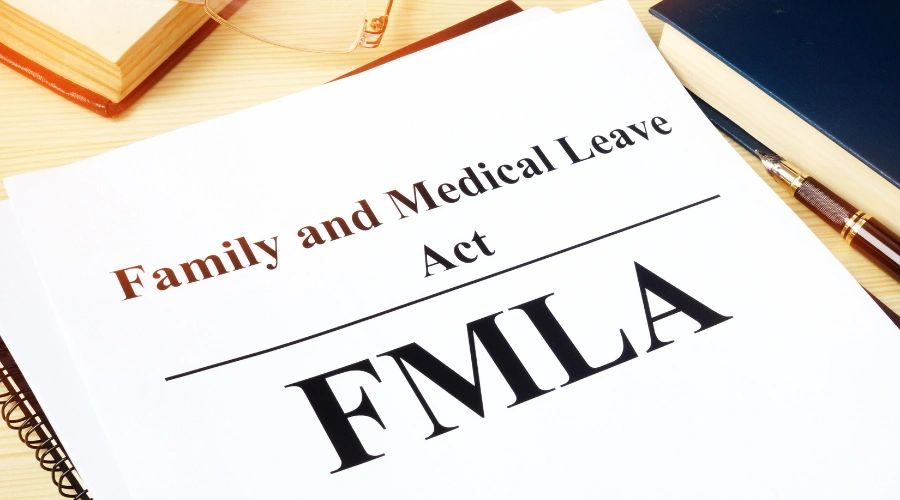
First, we’ll start with the Family and Medical Leave Act, or FMLA. This is a federal law that offers employment protection to individuals who need to take leave for a variety of reasons.
Eligible employees are able to stay away from their jobs while dealing with various situations in their personal lives, without having to worry about the status of their employment when they return.
What FMLA Leave Provides When Attending Addiction Treatment
Taking mental health leave in California under FMLA is permitted for up to 12 weeks. This type of extended leave can be taken to deal with a mental health crisis, receive treatment for substance use disorders, or deal with your own serious health condition of another kind.
Under the law, it is required for your employer to maintain your group health insurance benefits during this time. So, if you had health insurance through your employer when you took leave under FMLA, you will still have that insurance while you are on leave and when you return.
That is the case whether you take leave for mental health needs like dealing with major depressive disorder or other mental health conditions, or if you use FMLA for some other qualifying reason.
It does need to be noted that your leave will be unpaid when you take an absence from work under FMLA. Your employer is obligated by the law to maintain your position and have it waiting for you when you come back, but you do not have to be paid during this time.
Of course, if you have paid mental health leave as part of your employment, you may be able to use that benefit, or use any type of supplemental paid sick leave.
Who Qualifies for FMLA?
To qualify to use FMLA, you have to meet certain qualifications under the terms of the federal law. Those qualifications are outlined below –
- Work for a covered employer. This usually means that your company needs to have 50 or more employees working within a 75-mile radius. Having this stipulation in the law allows small businesses to be exempted from the rule.
- Have worked for your employer for at least 12 months. If you’ve been on the job for less than a year, you won’t be able to use FMLA to protect your position while you are gone.
- Have completed at least 1,250 hours of service in the past year. This qualification means that part-time workers who don’t reach that number of total hours aren’t eligible for protection.
If you meet all of the requirements above, you may be eligible to take leave. Of course, you should contact your human resources department directly to talk about the situation.
In addition to these eligibility requirements, you’ll also need to be seeking treatment for a qualifying mental or physical condition.
California Family Rights Act Protections
The California Family Rights Act offers similar benefits to those provided by FMLA, but it applies to a wider range of employers and employees. So, if you don’t qualify for coverage under the federal rules, you might have more luck with the state requirements.
As is the case with FMLA, you’ll be able to take up to 12 weeks of leave for your serious health condition.
Without experience in this area, it can be tricky to determine which of these two types of coverage, if either, you are eligible to take. That’s why it’s so important to talk with a human resources representative, or even an employment attorney, about the situation.
Getting help to understand your rights will make it easier to determine what path you can take forward.
Is Substance Use Treatment a Qualifying Serious Health Condition?

Yes, substance use disorders are recognized as medical conditions. If you are seeking treatment from a licensed healthcare provider or are entering a rehab program, there is a good chance that you will qualify as having a serious health condition under either FMLA or CFRA.
It is important to understand, however, that getting leave in California for treatment is not the same thing as needing time off because of an addiction. For example, taking leave to enroll in an inpatient care rehab program is likely to be protected.
Alternatively, missing work because of intoxication without seeking professional treatment is not. You will almost certainly be required to present documentation from your healthcare provider to support your request for leave.
Paid and Unpaid Leave in California
One of the challenges with taking leave under FMLA or CFRA is that you will not generally be paid during that time. So, while it is valuable to protect your job and make sure you still have a position when you return, it can be hard to go without a paycheck for months or weeks at a time.
Given that reality, there are a couple of options you can explore to bridge the gap and make sure your bills are covered while getting the treatment you require.
California State Disability Insurance
It is possible in some cases to qualify for partial wage replacement through State Disability Insurance that is administered by the California Employment Development Department. If you are unable to work due to a non work related illness, which may include mental health conditions or substance use disorders, SDI may step in to help out with your financial situation.
To apply and qualify for this coverage, you will need to have a licensed medical provider certify that you are unable to work during treatment.
Using Paid Sick Leave
As mentioned earlier, this may be a good time to use any sick leave or any accrued paid time that you have as part of your employment.
Your employer’s policies will determine exactly how your paid leave options can be used, so you might want to pull out your employee handbook or speak with HR to better understand the options that are available to you.
The Role of the Americans with Disabilities Act

While it won’t apply in all cases, you may be able to pursue additional assistance and protection through the Americans with Disabilities Act, or ADA. This is a law that is meant to provide protection to those with various disabilities, which can include certain mental health conditions and substance use disorders.
Employers are required to provide reasonable accommodations to qualified individuals. Those accommodations can vary, but may include things like modified work schedules, remote work arrangements, or temporary leave beyond what is covered by FMLA.
It’s important to note that each situation is evaluated differently under the ADA. There isn’t a set amount of leave that is guaranteed under the law, but rather the focus is on ensuring equal employment opportunity for all people.
You Have a Right to Privacy on Mental Health Leave in California
Many employees hesitate to take mental health leave because they don’t want their employer or coworkers to know about the condition they are facing. Out of fear of stigma or discrimination, many people choose to not take advantage of the laws that are meant to help them get the care they need and deserve.
However, you should understand that you have the right to privacy in these areas. Under all of the laws we have talked about on this page – FMLA, CFRA, and ADA – employers are required to keep your medical information confidential. You don’t have to disclose any detailed diagnoses to your supervisors or coworkers in the process of taking leave.
Typically, your employer will simply receive a certification stating that you do have a qualifying medical condition that requires leave. That certification does not say what the condition is, however, nor does it provide any details regarding the type of treatment you are being provided.
Privacy is a core component of your protections and should give you confidence that you can seek the help you need without anyone getting into your private business.
Get Support for Recovery at South Shores While on Your Mental Health Leave in California

If you are waiting around and hoping your mental health conditions will clear up on their own, the chances of that outcome aren’t great.
The mental health struggles you or a family member are dealing with will be best confronted by a qualified professional like those on staff here at South Shores Recovery.
Take a moment today to contact our team and learn more about the options we have available. You don’t have to be alone in this journey, and we would be honored to serve you.
All calls are confidential, so please reach out for more information and supportive options today!
References
- U.S. Department of Labor, Wage and Hour Division. (2026, January 26). Family and Medical Leave Act (FMLA). U.S. Department of Labor. https://www.dol.gov/agencies/whd/fmla/
- U.S. General Services Administration. (2025, March 28). The Family and Medical Leave Act (FMLA). USA.gov. https://www.usa.gov/family-leave-act/
- California Civil Rights Department. (n.d.). Family, medical, and pregnancy disability leave for employees in California. California Civil Rights Department. https://calcivilrights.ca.gov/family-medical-pregnancy-leave/


 877-919-8833
Recent Comments